
Assessing the risk of mosquito vector-borne diseases in Scotland and their response to environmental change
Mosquito Scotland set out to understand interactions between mosquito and bird populations in Scotland, and how environmental change may affect mosquito-borne disease risk.
About the project
Research question
How will mosquito-borne disease risk respond to environmental change?
Climate and other environmental changes are driving the expansion of mosquito vector-borne diseases into areas previously unsuitable for transmission. This is particularly true of mosquito-transmitted viruses that can normally circulate in bird populations and can spill over into humans. These include infections like West Nile virus and Usutu virus, which have been detected in the UK in recent years. The ability to detect and respond to emergence in the UK is constrained by major gaps in national surveillance, with current activities restricted almost entirely to England and Wales.
The Mosquito Scotland project set out to understand the interactions between mosquito and bird populations of Scotland. The project collected mosquitoes over two years in geographically and ecologically representative habitats across Scotland. Back in the laboratory, the team identified the host species field-collected mosquitoes had fed on, including humans, and whether they were infected with any viruses of public health or conservation concern.
The team also assessed the important mosquito vector Culex pipiens from Scotland for its ability to transmit viruses under controlled laboratory conditions.
Project images
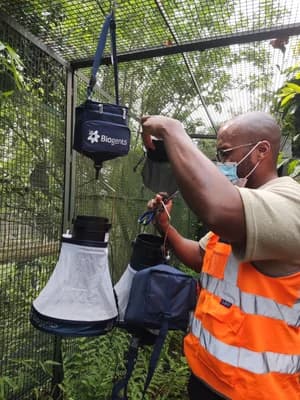
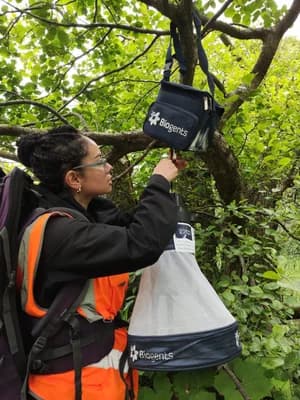
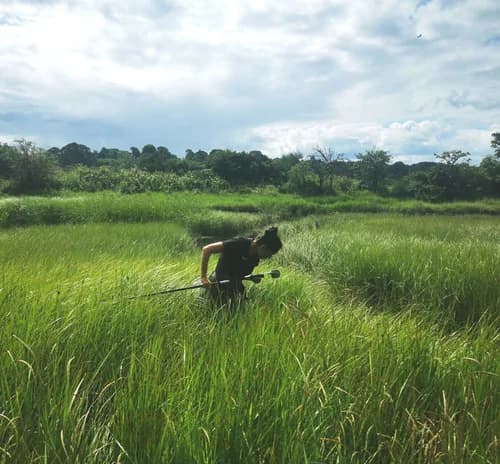
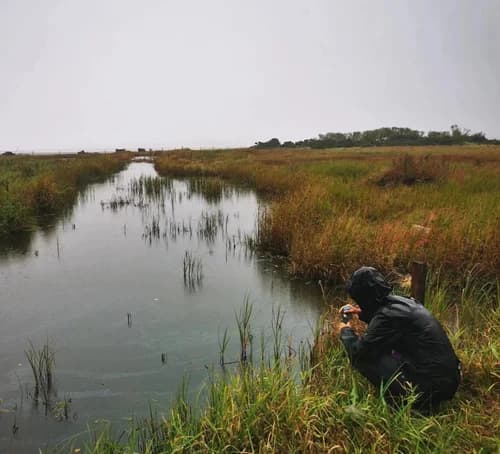
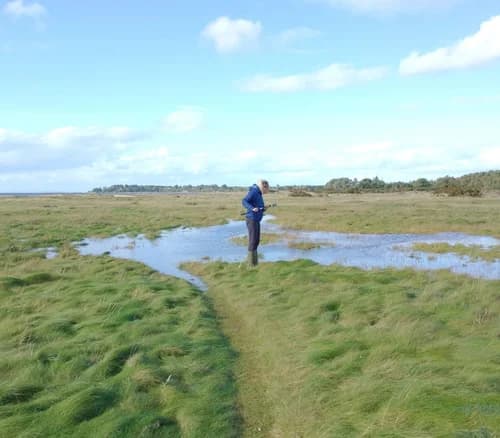
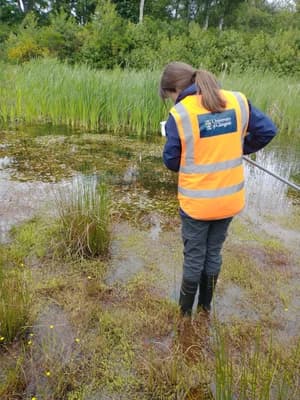
Photo credit: Mosquito Scotland project
Project details
- Project lead(s)
- Professor Heather Ferguson
- Lead organisation
- University of Glasgow
- Award value
- £1,003,927
- Period
- April 2023 to March 2026
People and organisations
Team members
- Heather FergusonPrincipal Investigator
- Jolyon MedlockCo-Investigator
- Juan MoralesCo-Investigator
- Emilie PondevilleCo-Investigator
- Davide DominoniCo-Investigator
- Steven WhiteCo-Investigator
- Georgia KirbyResearch Co-Investigator
- Luca NelliResearch Co-Investigator
- Francesco BaldiniCollaborator
Participating organisations
- University of Glasgow
- UK Health Security Agency
- UK Centre for Ecology & Hydrology
Research focus
- Mosquito surveillance
- Scotland
- Avian reservoirs
- Environmental change
How this connects to VBD Hub
The work can contribute mosquito occurrence, pathogen screening, competence, and risk-map outputs for an under-sampled part of the UK.
VBD Hub was not directly part of these research consortia. It was funded as follow-on shared infrastructure to support discovery, documentation, and reuse of outputs across the wider UK One Health vector-borne disease community.
Project links
Data outputs and expected datasets
- Entomological surveillance from nature reserves - VecDyn.
- Mosquito citizen science data - iNaturalist.
- Lab mosquito fitness data - VecTraits.
- Pathogen data in mosquitoes and birds - VecDyn can host mosquito data; Hub can host bird data.